
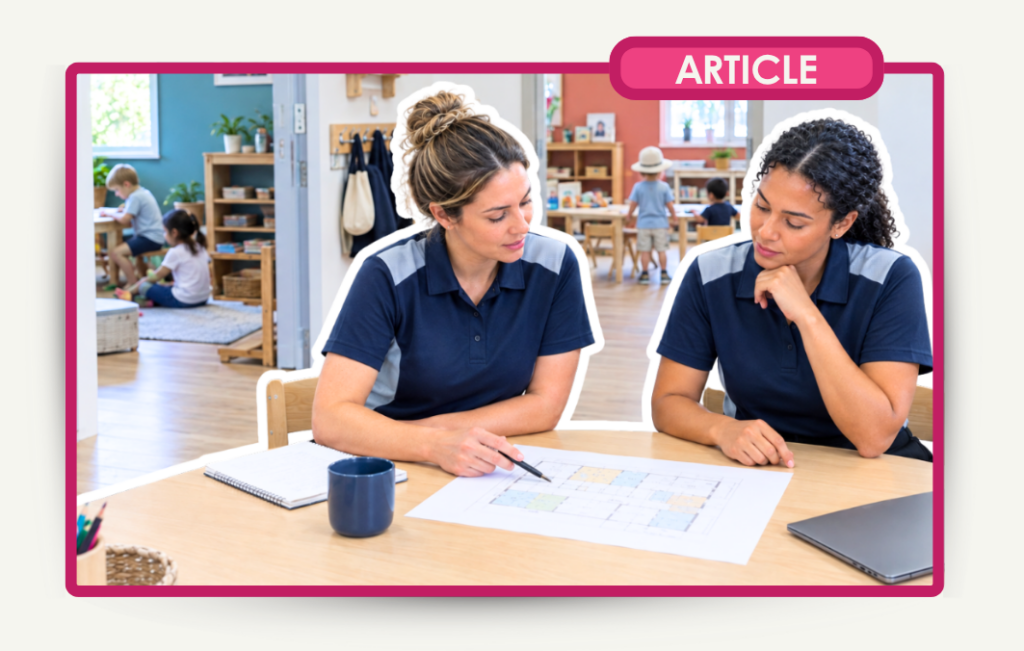
As 2026 draws to a close, many early learning leaders are beginning to plan their room allocations for 2027. And with that comes a familiar question: Should we move our educators into different rooms next year?
For some services, moving educators between rooms has become an annual tradition. Preferences are collected, new teams are announced, and sometimes the changes are even celebrated with room reveal parties.
But just because we’ve always done it this way, does that mean it’s the best approach?
Moving educators between rooms is far more than a rostering decision. It can affect educator confidence, team relationships, staff morale and, most importantly, the continuity of relationships children experience.
Before making changes for 2027, it’s worth considering whether those changes will genuinely improve outcomes or simply create unnecessary disruption.
Why Room Changes Matter More Than We Think
For educators, their room is often more than just where they work. It’s where they’ve developed relationships with children and families, established routines, built professional confidence and learned how to work effectively with their teammates.
Moving an educator into another room can mean starting much of that process again.
When changes are made without a clear reason or adequate consultation, educators may feel frustrated, unsettled or undervalued. This is particularly true when they’ve worked hard to establish a successful team or develop expertise with a particular age group.
Of course, change isn’t always negative. Moving educators can provide valuable professional development opportunities, introduce new perspectives and strengthen teams.
The important question isn’t whether educators should ever move rooms. It’s whether the move has a clear purpose and whether the benefits outweigh the disruption.
The Benefits and Risks of Moving Educators
There are good reasons to consider moving educators between rooms, particularly when those decisions are linked to professional development and service improvement.
Potential benefits include:
Professional growth and cross-skilling: Giving educators opportunities to develop confidence, skills and experience with different age groups.
Stronger team dynamics: Bringing together educators with complementary strengths, capabilities and working styles.
Supporting children’s transitions: Where appropriate, having a familiar educator move with a group of children to provide continuity and emotional security.
Developing future leaders: Providing emerging leaders with broader experience across the service.
Addressing genuine operational needs: Responding to changes in enrolments, educator capabilities or team structures.
However, there are also risks that shouldn’t be underestimated.
Potential drawbacks include:
Disrupted relationships: Children, families and educators may lose established relationships that have taken considerable time to develop.
Team development starting again: Even high-performing teams may return to the storming stage as educators establish new relationships, responsibilities and ways of working.
Increased pressure on Room Leaders: Introducing new team members creates additional induction, coaching and supervision responsibilities.
Reduced morale: Educators who feel they’ve been moved without good reason may become disengaged or resistant.
Inconsistent practices: Established routines, expectations and approaches may be disrupted while new teams find their feet.
These risks become particularly significant when an entire service reshuffles educators at the beginning of the year.
Five Mistakes to Avoid When Planning Room Allocations for 2027
Before finalising your room allocations, consider whether your leadership team is falling into any of these common traps.
1. Moving educators simply because it’s a new year
A new calendar year doesn’t automatically mean teams need to change. If a room is functioning well, educators are growing professionally and children are benefiting from consistent relationships, what is the purpose of changing it?
2. Using room changes to manage performance problems
Moving an educator because they’re struggling with their responsibilities, relationships or attitudes rarely solves the underlying problem. Performance concerns need to be addressed through clear expectations, feedback, coaching and appropriate performance management processes.
A room change shouldn’t be used as a substitute for effective leadership or as a disguised demotion.
3. Giving educators too much choice
Asking educators about their room preferences can be valuable, but preference forms shouldn’t become the deciding factor.
The leadership team must consider educator capabilities, children’s needs, team dynamics and the overall operation of the service. Educator preferences are one consideration, not the only consideration.
4. Making too many changes at once
Imagine spending an entire year building strong relationships, improving communication and establishing effective routines, only to change almost every team member in January.
Large-scale changes can create unnecessary instability, placing additional pressure on Room Leaders at a time when children, families and educators are already navigating the beginning of a new year.
5. Failing to explain the reasons behind decisions
Educators are more likely to understand and engage with changes when they know why they’re happening.
Simply announcing room allocations without a conversation can leave educators feeling that decisions have been made to them, rather than with them.
While not everyone will agree with every decision, leaders should be able to explain the purpose behind a change.
A Smarter Approach: Move Educators With Purpose, Not Tradition
Rather than automatically restructuring every room in January, consider a more deliberate approach to educator movement throughout 2027.
For example, if an educator has expressed an interest in developing their skills with toddlers, why not plan a supported transition during the year?
This allows the service to:
Move one educator at a time, rather than disrupting an entire team.
Connect the move to a specific professional development goal.
Provide opportunities for observation, mentoring and induction before the change.
Give Room Leaders time to support the new educator.
Monitor the impact on children, families and the existing team.
Mid-year changes may be more appropriate in some circumstances, when teams are established and there is greater capacity to support a transition.
Of course, some January changes will be unavoidable. Enrolment patterns change, educators leave, new positions are created and operational requirements evolve.
The goal isn’t to avoid moving educators altogether. It’s to stop treating annual room changes as something that automatically needs to happen.
If You’re Changing Teams in 2027, Have a Three-Week Transition Plan
If your service has decided to make multiple room changes for 2027, don’t assume new teams will automatically work well together.
Room Leaders need a structured approach to bringing their teams together, establishing expectations and developing effective working relationships.
A simple three-week plan can make a significant difference.
Week 1: Build Relationships
Before diving straight into routines and responsibilities, create opportunities for educators to get to know one another.
Consider activities such as Two Truths and a Lie, sharing individual strengths or identifying the skills and experiences each person brings to the team.
Encourage Room Leaders to explore questions such as:
What are the strengths of each team member?
What helps each person feel supported at work?
How do we want children and families to experience our team?
Week 2: Establish Systems and Expectations
Once educators have started building relationships, focus on how the room will operate.
Review daily routines, communication processes, responsibilities and expectations.
This is also an opportunity to identify gaps in knowledge or capability and provide additional training.
Every educator should be clear about what’s expected of them and who they go to when they need guidance or support.
Week 3: Agree on Communication and Feedback
Strong teams don’t just happen because people get along. They develop when educators know how to communicate, provide feedback and work through challenges constructively.
Support teams to discuss:
How will we raise concerns with one another?
How will we provide and receive feedback?
How will we make decisions and resolve disagreements?
How will we recognise and celebrate what’s working well?
These conversations help establish the foundations for accountability, trust and effective teamwork.
Before You Change Your Rooms, Strengthen Your Room Leaders
One of the most important considerations in any room allocation decision is the capability of the person leading the team.
A strong Room Leader can support educators through change, establish clear expectations and maintain a positive environment for children and families.
However, even an experienced Room Leader can struggle if they’re given a completely new team without adequate time, resources or support.
Before finalising your 2027 allocations, consider:
Have we appointed Room Leaders based on their leadership capabilities rather than simply filling vacancies?
Do our Room Leaders understand their responsibilities for coaching, feedback, accountability and team development?
Have we provided leadership training before expecting them to lead a new team?
Do they have sufficient time and support to induct new educators?
Are our leadership team members consistent in the expectations and messages they communicate?
It’s also worth considering the wider leadership structure within your service.
Effective services don’t rely solely on the Centre Manager to lead every educator. They develop capable Room Leaders, establish a coordinated leadership team and create opportunities for educators to contribute through projects and initiatives.
For example, project squads focused on sustainability, reconciliation, inclusion or educator wellbeing can provide valuable leadership development opportunities without requiring educators to change rooms.
Professional growth doesn’t always require a change of room. Sometimes, it requires a change in responsibility, opportunity or support.
Five Questions to Ask Before Finalising Your 2027 Room Allocations
Before announcing next year’s teams, bring your leadership team together and work through these questions.
Why are we making this change? Is there a clear benefit for children, educators or the service?
What’s already working well? Are we about to disrupt a high-functioning team or established relationships unnecessarily?
How will this affect children? Have we considered attachment, continuity of care and the individual needs of children?
Are our Room Leaders ready? Do they have the capability, time and resources to support new team members?
Could we achieve the same outcome another way? Would mentoring, additional responsibilities, professional development or a staged transition be more effective?
If your leadership team can’t clearly explain why a particular move is necessary, it may be worth reconsidering the decision.
Final Thoughts: Make 2027 About Stronger Teams, Not Just Different Teams
Moving educators between rooms can create opportunities for professional growth and service improvement. But it can also disrupt relationships, increase workloads and undo some of the team development achieved throughout the year.
As you prepare for 2027, resist the temptation to change teams simply because it’s what you’ve always done.
Keep what is working. Strengthen what needs improving. And only change what has a clear reason to change.
The goal for 2027 shouldn’t simply be to create new room teams. It should be to create stronger, more capable and more consistent teams that provide the best possible experience for children, families and educators.

Leave a Reply