
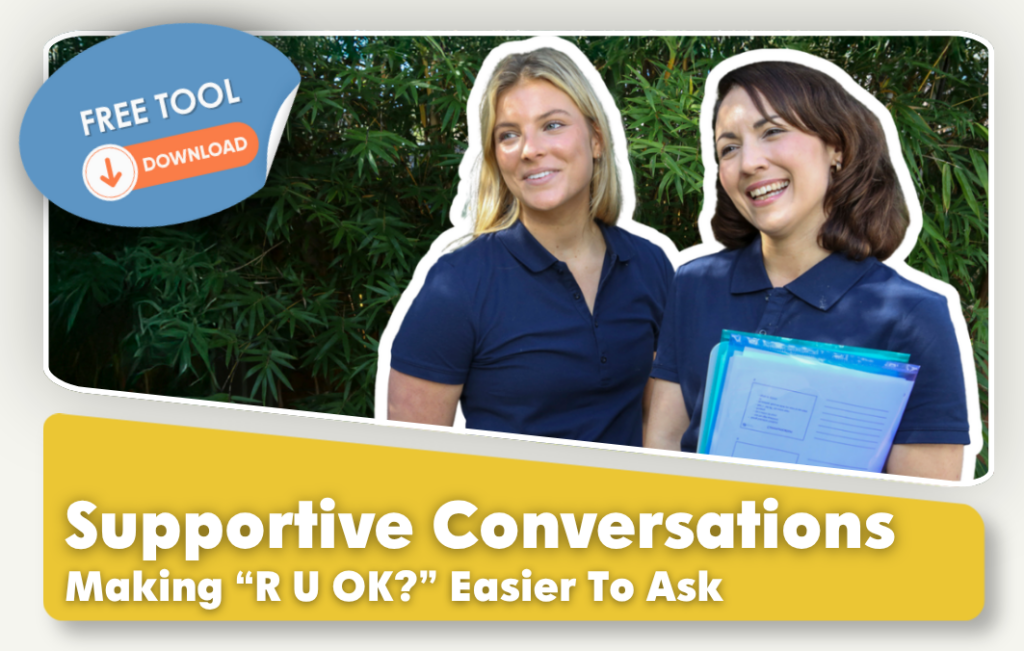
R U OK? Day is a good reminder to check in with the people around us.
But educator wellbeing isn’t something we should think about once a year.
In Early Childhood, our teams work in busy, emotional and often demanding environments. And when someone is stressed, overwhelmed or simply having a hard week, it can affect how they communicate, how they respond to others and how they feel about coming to work.
So how do we make checking in part of everyday leadership?
One simple way is through a weekly Pit Stop.
What is a Pit Stop?
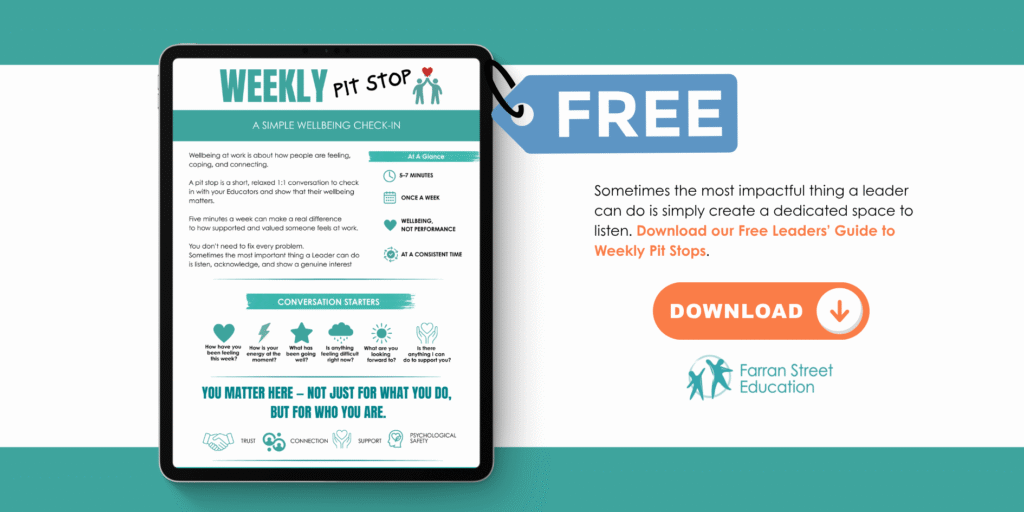
A Pit Stop is a short, informal 1:1 conversation between a Leader and an Educator.
It isn’t a performance meeting.
It isn’t a time to talk about tasks, other Educators or everything that needs to be fixed.
It is simply a regular opportunity to ask:
How are you going?
Pit Stops usually take around 5–7 minutes and happen at a consistent time each week.
That small amount of time can make a big difference.
“But I already check in with my team…”
Most Leaders do.
They walk through the rooms in the morning and say hello.
They ask, “How are you going?”
They tell Educators, “My door is always open.”
All of those things are valuable.
But they are not the same as a Pit Stop.
A quick hello while you are walking through the room is connection.
An open-door policy is availability.
A Pit Stop is intentional, scheduled and focused attention.
It creates a regular space where the Educator doesn’t have to find the right moment, interrupt you or decide whether their concern is “important enough” to bring to you.
You create the space first.
Pit Stop Do’s and Don’ts
Do:
- Schedule it at a consistent time each week.
- Make it 1:1 wherever possible.
- Give your full attention — put the phone down and stop doing other tasks.
- Ask open questions about how the Educator is going.
- Listen before trying to solve the problem.
- Remember what they told you and follow up the next week.
- Keep it relaxed and conversational.
- Protect the time rather than cancelling it whenever the service gets busy.
Don’t:
- Count saying hello in the morning as a Pit Stop.
- Rely on “my door is always open.” Some Educators will never walk through it.
- Turn it into a performance conversation.
- Use the time to talk about another Educator.
- Spend the whole conversation giving advice.
- Check your phone or answer emails while they are talking.
- Only check in when something has gone wrong.
- Cancel it repeatedly and then tell your team wellbeing is a priority.
Why do Pit Stops matter?
When Leaders regularly check in with their Educators, they send an important message:
I’m interested in you as a person, not just in the work you do.
Over time, these conversations can help build stronger relationships, greater trust and a more supportive team culture.
They also give Leaders an opportunity to notice when something might not be quite right.
An Educator may be feeling overwhelmed.
They may be struggling with something outside work.
They may simply need someone to listen.
You don’t need to solve every problem.
Sometimes the most valuable thing a Leader can do is create the space for someone to talk.
Catch things before they become bigger
One of the biggest benefits of regular Pit Stops is that they give Leaders an opportunity to notice changes early.
Without regular conversations, we can easily miss the small signs that someone is struggling.
Until suddenly they are exhausted.
Frustrated.
Disengaged.
Or ready to leave.
A weekly check-in gives you the chance to notice what is happening before it reaches that point.
It may lead to a conversation about workload, support, relationships, resources or simply what that Educator needs from you right now.
What can you ask?
You don’t need a complicated wellbeing questionnaire.
Start with a conversation.
You might ask:
- How have you been going this week?
- What has been taking up most of your energy lately?
- What has been going well?
- Is there anything making work feel harder at the moment?
- What are you looking forward to this week?
- Is there anything you need a little more support with?
And then listen.
Sometimes there will be something to follow up.
Sometimes there won’t.
The value comes from creating a regular space where an Educator knows they can talk when they need to.
Don’t wait for R U OK? Day
R U OK? Day reminds us that a conversation can make a difference.
But the strongest wellbeing cultures aren’t built through one conversation.
They are built through small, consistent moments of connection throughout the year.
A five-minute Pit Stop might feel simple.
But done consistently, it can strengthen trust, help Leaders identify concerns earlier and create a workplace where Educators feel genuinely seen, supported and valued.
So this R U OK? Day, don’t just ask the question.
Build the check-in into the way you lead.

Leave a Reply